
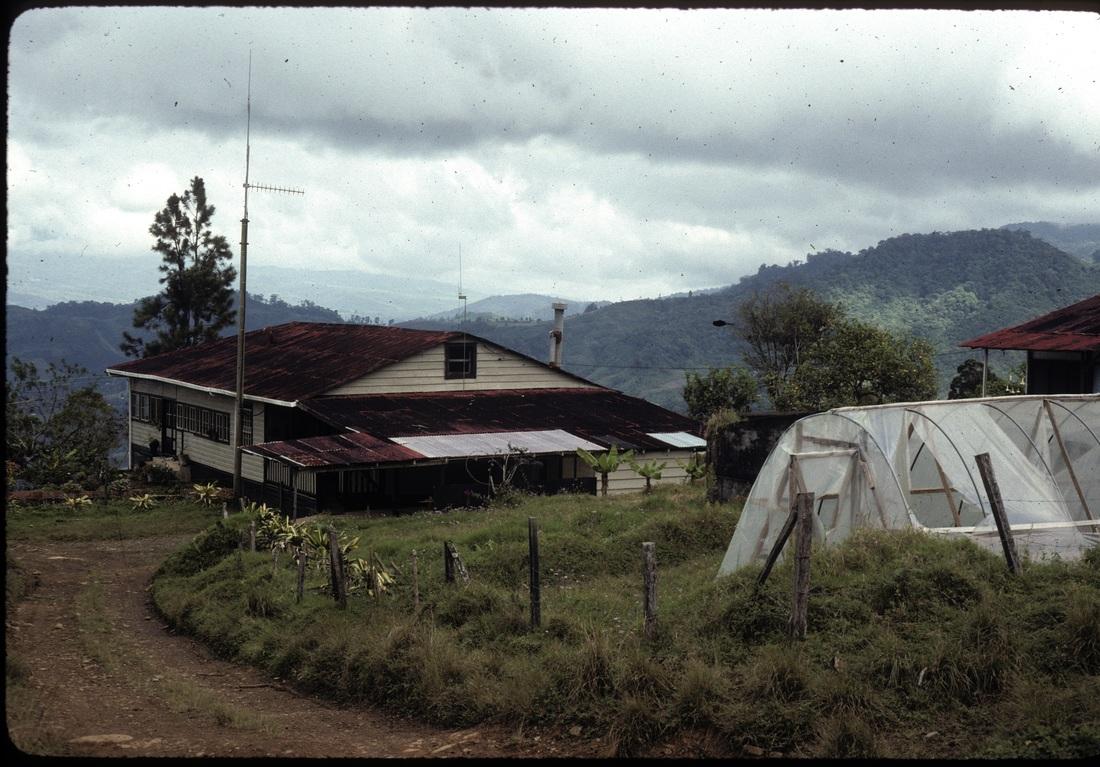
The story of Finca Queverí, a family farm in Orosi.
A family tradition begun in the 1930s and rooted here again since 1994.
Finca Queverí
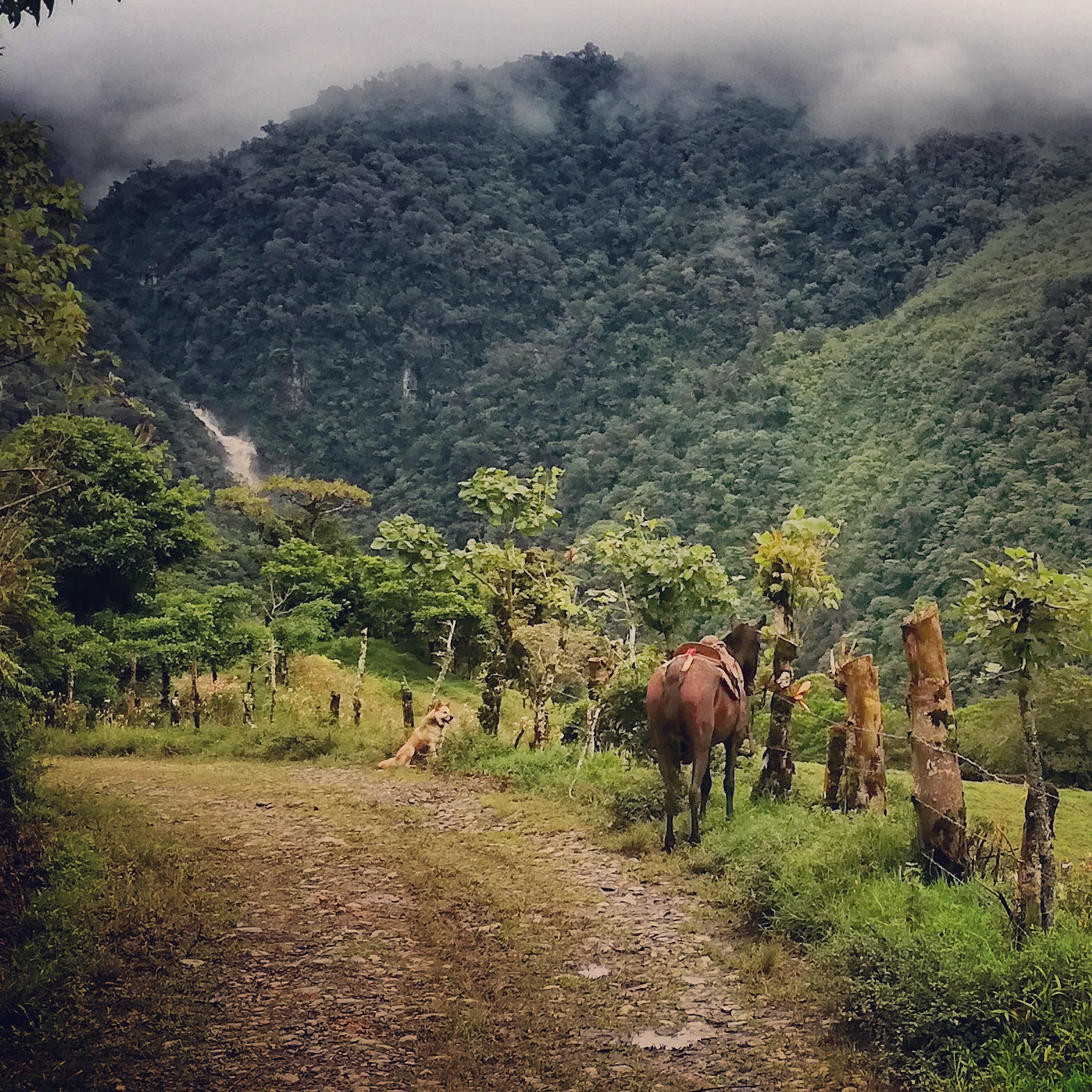
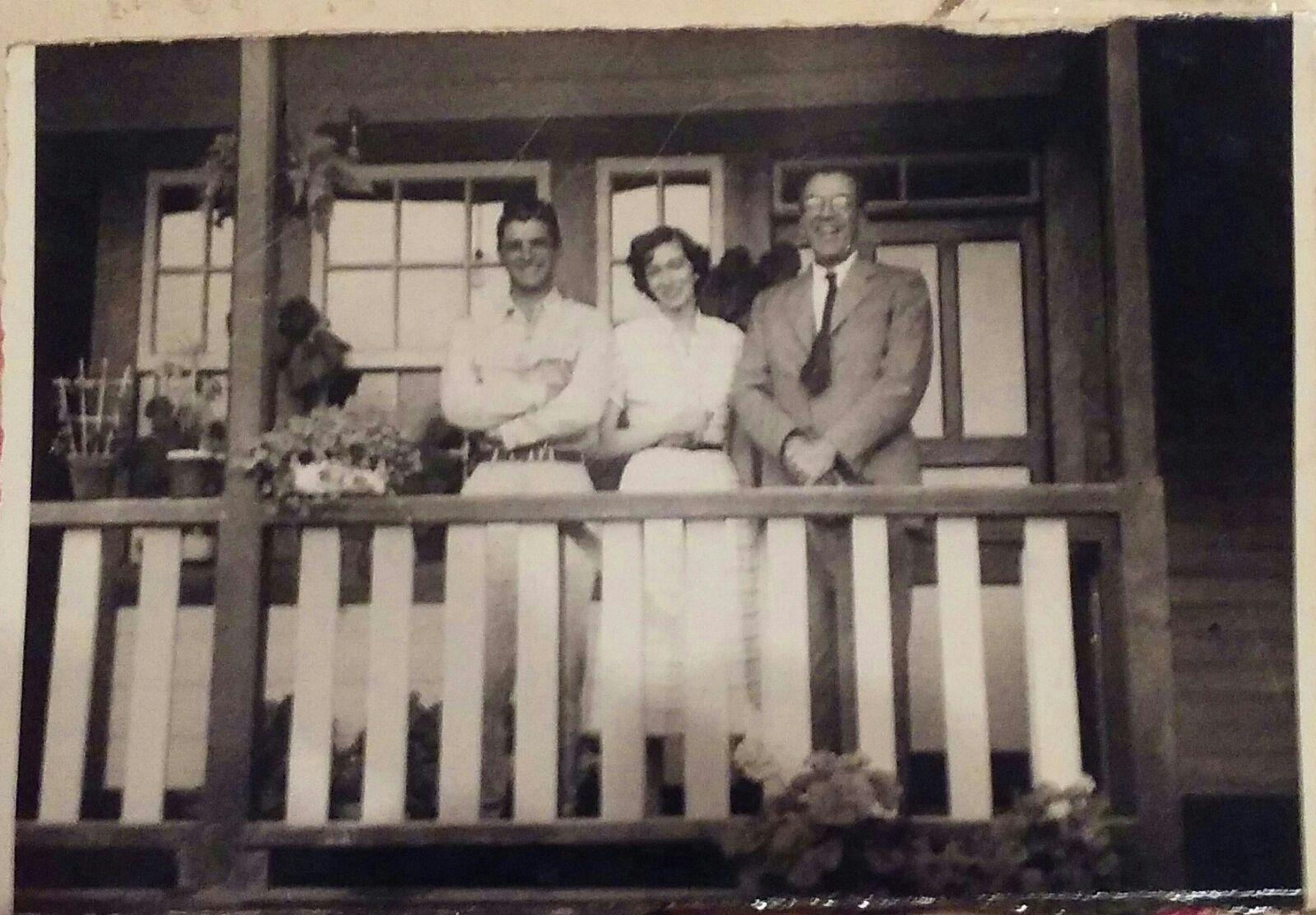
On this land, Baltazar Fernández and Mariano Guardia began a family farming tradition. The farm returned to the family in 1994 and today brings together cattle, rural tourism and conservation.
 01
Our Story — Since 1936
- Orosi Valley · before 1936
- Finca Queverí · from 1936
- 1854 · Documents — The Orosi Valley, explored by Alexander von Frantzius
In January 1854 the German naturalist Alexander von Frantzius arrived in Costa Rica, carrying a letter of recommendation from Alexander von Humboldt. He explored the Orosi Valley and recounted his journey in the article “The old convent of the Orosi Mission”, published anonymously in 1860 in the German magazine Das Ausland. In it he describes crossing the Río Macho, General Montero's farm, indigenous tombs and the hot springs. Researcher Luko Hilje Quirós transcribed the article and proved its authorship (Revista Comunicación, 2008).
- 1875 · Photos — Orosi Church · 1875
Historical photograph of Orosi Church from 1875.
- 1875 · Photos — Orosi Valley · 1875
Historical photograph of the Orosi Valley from 1875. Otto Simon Collection.
- 1875 · Photos — Río Macho · 1875
Historic photograph of the Río Macho river, 1875. Otto Simon collection.
- 1894 · Photos — Orosi Church · 1894
Historical photograph of the Orosi Church, from 1894.
- 1900 · Photos — Orosi Valley · 1900
Historical view of the Orosi Valley around 1900, with riders on horseback and the river winding through the mountains.
- 1920 · Stories — Queverí: where the ox teams rested · 1920
In the 1920s, when coffee set the pace of Costa Rica's economy, Queverí played its own role in the life of the Orosi farms. According to our family memory, while coffee plantations spread across the lower lands of the valley, Queverí, at about 1,600 meters above sea level, served as a resting place for the oxen that made hauling the grain possible. Our story is tied to the coffee farms of don Edmundo Montealegre and to the work of our grandfather Baltazar Fernández, who managed more than fifty teams of oxen dedicated to transporting coffee. With them, loads were moved between the farms and all the way to the railway line in Paraíso. Seeing that group of oxen descending the winding road of Queverí was quite a spectacle. A long succession of teams appeared and disappeared between the curves of the mountain, following the road to the farms where another day of work awaited them. In family memory it remains an unrepeatable scene: a spectacle of country life that will never be seen again as it was then. Those were times when the strength of the animals, the skill of the ox drivers and the rural roads sustained an essential part of commerce. The arrival of the train had transformed transport, but the carts still performed an indispensable task: bringing the farms' production to the railway. From there, the coffee could continue to Puerto Limón and foreign markets, in a commercial history in which England had occupied a fundamental place. In that network of coffee plantations, roads and rails, Queverí was a place to regain strength. There the teams rested after the workdays, before returning to the hauling. And so the story of Queverí is also part of the story of coffee: that of the men and animals who connected the mountains of Orosi with the train and, through it, with the world.
- 1930 · Photos — How Queverí began · 1930
“I’m going to introduce you to a gentleman whose word is so good that all you need to seal a deal is a hair from his moustache.” Don Edmundo Montealegre, referring to our great-grandfather Baltazar Fernández Cervantes, when telling don Mariano Guardia about Queverí.
- 1947 · Video — Costa Rica Carnival 1947 · Río Macho and oxcarts
Archive footage from 1947: views of Costa Rica, the Río Macho and oxcarts, from a film about that year's Carnival.
- 1951 · Photos — Queverí School, 1951
Photograph of Queverí School in 1951.
- 1960 · Photos — Marbella, the first Excellent cow · 1960
This photograph shows our father, Eladio Fernández, together with Ana Cristina Guardia, Arnoldo Soley, the late Óscar Guardia, the late Mariano Guardia Montealegre and the late Virginia Vargas, presenting Marbella, the first cow classified as Excellent at Ganadera Queberi.
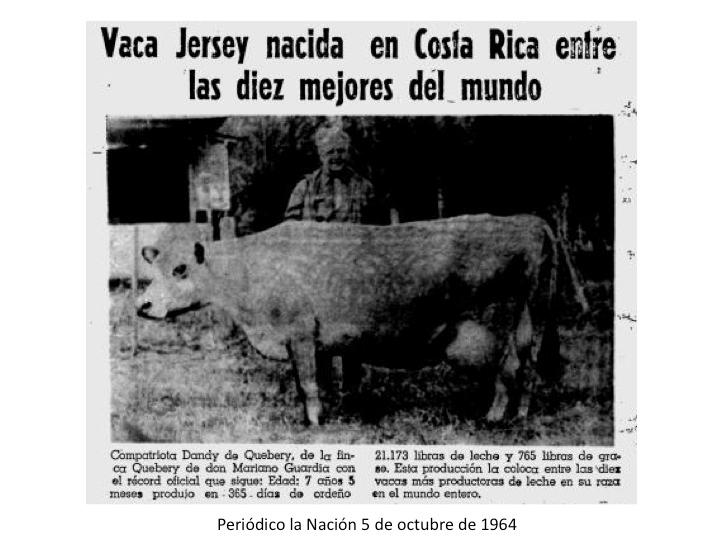
- 1964-10-05 · Documents — Compatriota de Queverí, 1964
A clipping from La Nación dated October 5, 1964, about the Jersey cow Compatriota Dandy de Queberí. The article describes her as one of the world’s top ten cows for milk production.
- 1984-07-27 · Photos — In memory of don Mariano Guardia Montealegre
Don Mariano Guardia Montealegre passed away on July 27, 1984, at the age of 77.
- 1994 – present · Photos — The Fernández Estrada family · 1994–present
In 1994, the project returned to the Fernández Estrada family, with Eladio Fernández Mata and Rossy Estrada Umaña. Queverí has remained in the family’s hands from then to the present.
- 2012-11-18 · Video — Cerdos en Pastoreo · 18 November 2012
A family video from 18 November 2012: pigs grazing in the pastures of Finca Queverí in Orosi, Costa Rica, recorded by the family and shared on their own YouTube channel.
- 2019 · Stories — La Fonda del Alto · Tripadvisor Certificate of Excellence 2019
In 2019, La Fonda del Alto received Tripadvisor’s Certificate of Excellence for its gastronomy. Our mother, Rossy Estrada Umaña, is pictured holding the award.
- 2019-05-10 · Stories — Chef Diego Guerrero visits · 10 May 2019
On 10 May 2019, international chef Diego Guerrero visited La Fonda del Alto during an ICT tour, together with chef José Gonzalez of Al Mercat and our mother, Rossy Estrada Umaña.
Diego Guerrero Peromingo, born in April 1975 in Vitoria-Gasteiz, Basque Country, Spain, is the owner and chef of DSTAgE, the Madrid restaurant recognised with two Michelin stars.
- 2021-03-13 · Photos — In memory of our mother, Rossy Estrada Umaña
Our mother, Rossy Estrada Umaña, passed away on 13 March 2021. She was the soul of Queverí and stood up for our project through its hardest moments. She founded our tourism project — Posada Queverí, La Fonda del Alto and the Horseback Tour — and lives on in the many visitor reviews that thanked her for her care and warmth.
- 2024-06-10 · Photos — WINNERS 10 June 2024: Cultiva+ Programme
Finca Queverí was among the 34 winning projects of the Cultiva+ competition, announced on 10 June 2024.
Source: Delfino.cr — https://delfino.cr/2024/06/anuncian-a-los-34-proyectos-ganadores-del-concurso-cultiva
- 2026 · Video — Helping restore the Orosi Church · 2026
Finca Queverí collaborates in the restoration of the San José de Orosi Church, one of Costa Rica's oldest colonial churches.
- 2026 · Photos — Restoring the Orosi Church · interior
Restoration work inside the Church of San José de Orosi, with its wooden ceiling and stone walls.
- 2026 · Photos — Boñiga terrosa from Queverí
Boñiga terrosa — earth-flecked cow dung, a traditional material prepared at Finca Queverí as a contribution to the restoration of the Orosi Church. It is used to emulate the ancient technique of making adobe and bareque (wattle and daub).
Welcome to the highlands
Slow down in the mountains, close to nature and the people who care for it.